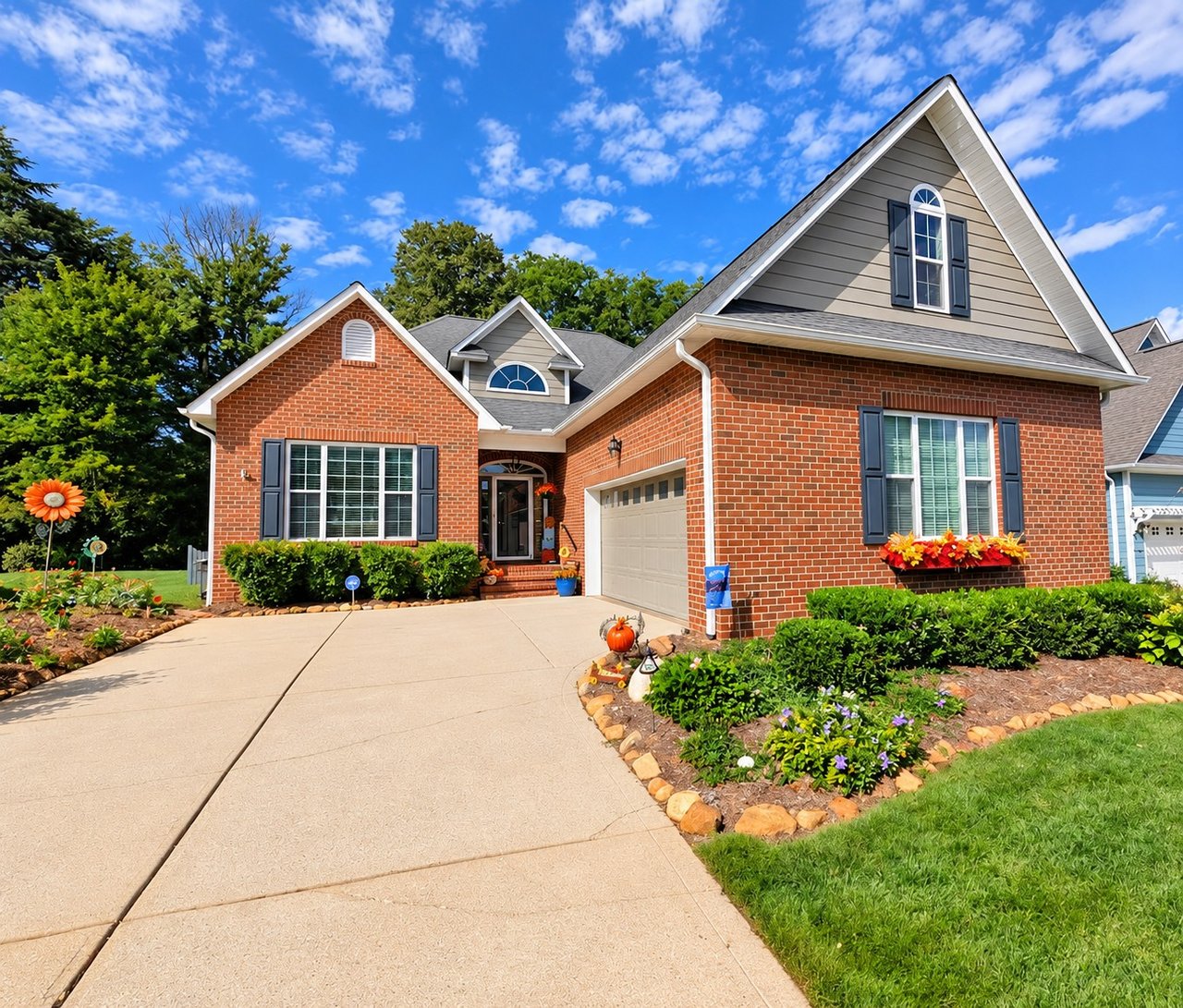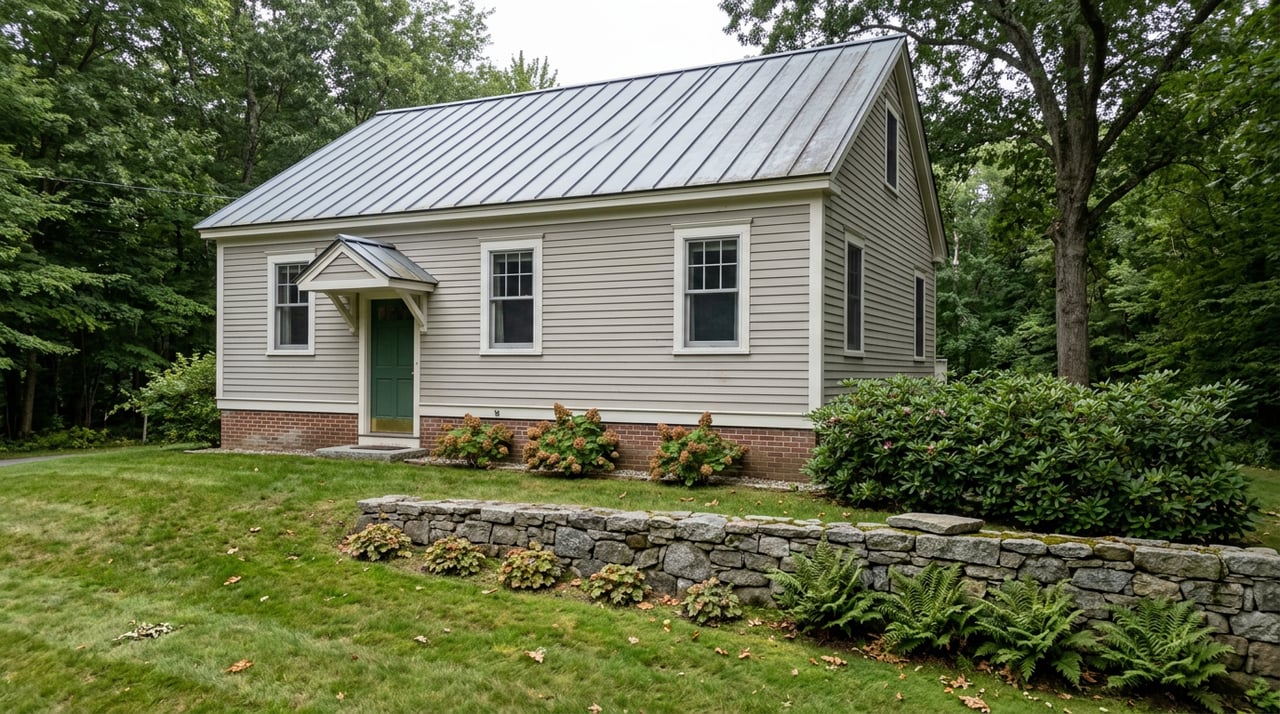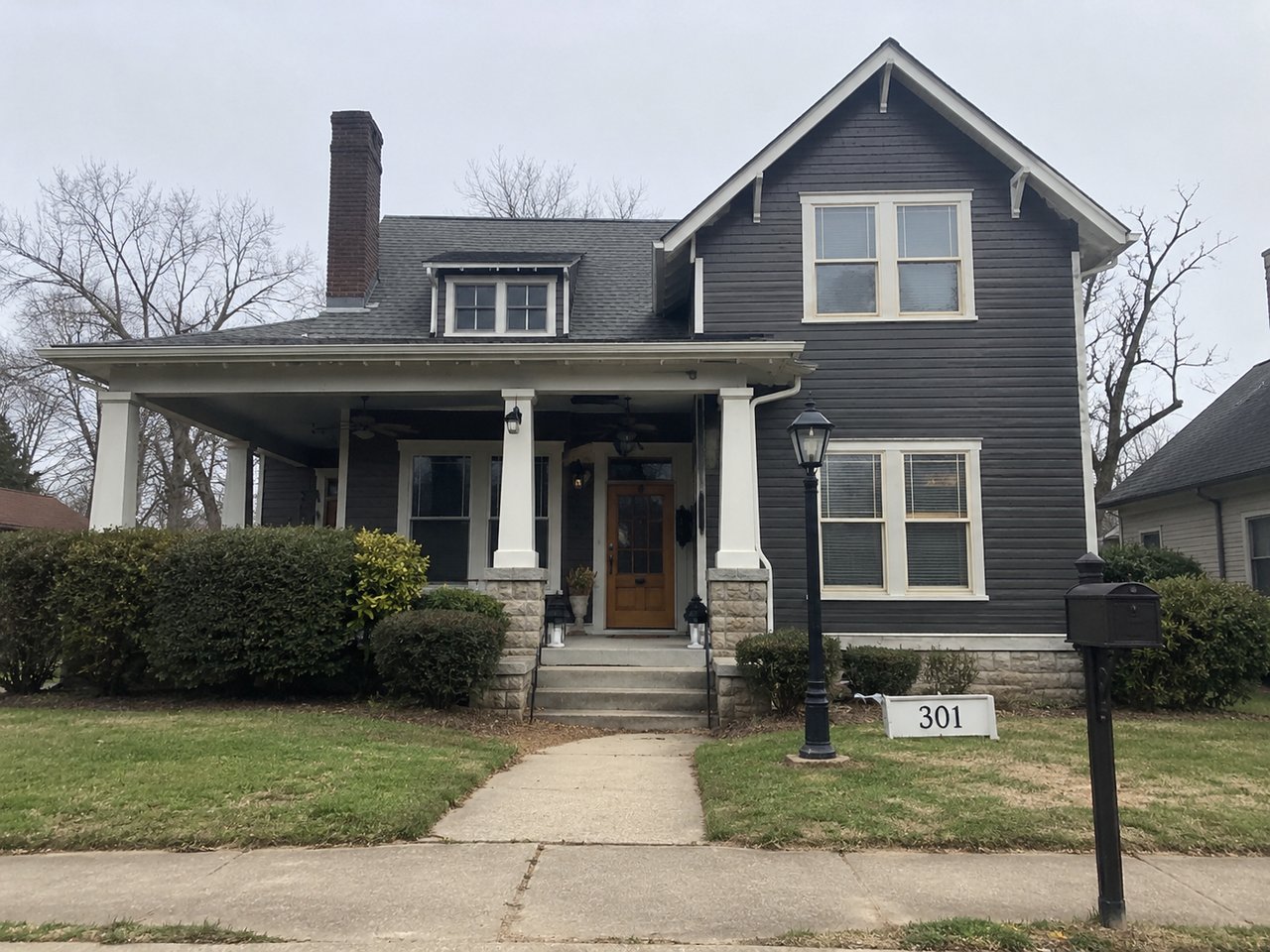
I had a buyer stand on the porch of a house on Mulberry Street this spring, running her hand along an original sash window, asking me the question I hear at least once a month in this part of town. "So if I buy this, I can't change anything, right? Because it's historic?"
The honest answer is: it depends which kind of historic, and the listing sheet almost never tells you.
Downtown Lenoir carries two separate designations that both get flattened into the word "historic" in casual conversation, on Zillow descriptions, in agent chatter at open houses. One of them is essentially decorative for a private homeowner. The other one follows the deed, shows up at your closing table in spirit if not in writing, and will still be sitting there when you decide to sell in six years. Buyers and sellers who don't know the difference end up either overpaying for restrictions that don't exist, or getting blindsided by ones they didn't know they'd inherited.
The Listing Sheet Doesn't Draw the Line
Most of what people mean when they say "downtown Lenoir is historic" refers to the Lenoir Downtown Historic District, listed on the National Register of Historic Places in 2007 with a boundary increase added in 2013. The district covers roughly 41 contributing buildings along Main Street, Mulberry, Boundary, and Church, radiating out from the old town square at Main and West Avenue. It includes recognizable names like the 1941 Center Theater, the 1939 O.P. Lutz Furniture Company building, and Dayvault's Drug Store from 1937.
Here is the part that surprises almost everyone: National Register listing places no restrictions on what a private owner can do to that building. None. You can swap out the windows, repaint however you like, tear off a porch, and no state or federal agency will ever ask you for permission. The listing is a form of recognition, not a form of control. It opens the door to certain historic tax credits if you're doing a qualifying rehabilitation project, but nobody is standing over your shoulder with a rulebook.
Local landmark designation is a different animal entirely, and it comes from a different source. It's granted by the City of Lenoir's own Historic Preservation Commission and adopted by City Council as an ordinance, not by the state or the National Park Service. Once a property or a district carries that designation, the owner needs a Certificate of Appropriateness from the HPC before touching the exterior: no new windows, no siding swap, no new construction, no demolition, without a review first. And that requirement doesn't expire when you sell. It transfers with the property to whoever buys it next.
Why the Mills Needed the Second Designation
You can see exactly why this distinction matters by looking at what happened at the old Lenoir Mills Campus on the west side of town. The Blue Bell textile mill, the Steele Cotton Mill, and the old freight depot had all been sitting there for decades when developers Yorke Lawson and Tom Niemann started working with the city to bring them back to life. The City's Historic Preservation Commission designated all three properties as local historic landmarks in 2019, specifically because that status unlocked a 50 percent property tax break on top of the state and federal historic tax credits the developers needed to close a financing gap on the project.
That local landmark status is also why HPC members were personally touring the Blue Bell renovation in progress, reviewing plans before permits were issued, making sure architectural details got preserved as the building converted into what's now 46 loft apartments. National Register listing alone wouldn't have required any of that oversight. It was the local landmark designation that put the Commission in the room.
That project is now folded into what the city's 2024 Downtown Lenoir Master Plan calls the West District and The Campus, one of four sub-areas the plan carved out of downtown alongside the North District, Downtown District, and Mulberry Street South District. The framework is new. The underlying legal split between "recognized" and "regulated" is not.
National Register vs. Local Landmark, Side by Side
National Register Listing | Local Landmark or Local Historic District | |
|---|---|---|
Who grants it | Reviewed through the State Historic Preservation Office and the National Park Service | City of Lenoir's Historic Preservation Commission, adopted by City Council ordinance |
Effect on a private owner | None. Exterior changes require no approval | A Certificate of Appropriateness is required before exterior alterations, new construction, or demolition |
Financial upside | Access to federal and state rehabilitation tax credits for qualifying projects | Can add a local property tax benefit on top of state and federal credits |
Transfers to the next owner | Yes, the recognition stays, but so does the lack of restriction | Yes, and the next owner inherits the review requirement along with the house |
Most of Main Street, Mulberry, Boundary, and Church carries only the first designation. A property can carry both, and some do, but one doesn't automatically imply the other. The only way to know for certain which rulebook applies to a specific address is to ask the City directly, before you write an offer or accept one.
What This Actually Means If You're Touring Right Now
If you're looking at a home anywhere near downtown Lenoir and the listing mentions "historic," here's the question sequence I walk clients through before we go any further:
- Is this specific address individually landmarked, or only located inside the National Register district boundary?
- If it's within the district, has the City separately designated it, or the block it sits on, as a local historic district requiring a Certificate of Appropriateness?
- If a COA is required, what's actually covered under the Commission's design guidelines, and how long does review typically take before you can pull a building permit?
- Does the property currently receive any tax deferral tied to landmark status, and does that benefit survive a change of ownership or reset?
None of that shows up on an MLS sheet. It shows up in a phone call to the City of Lenoir's planning staff, and it's worth making that call before you fall in love with a floor plan you might not be able to touch.
The Other Kind of Old Doesn't Care About Any of This
Legal designation is one layer of due diligence. What's actually inside the walls is a separate one, and it doesn't discriminate between National Register and local landmark properties. In established residential pockets like Lower Creek and Kentwood, where homes span several decades of construction, local home inspectors routinely flag aging wiring, outdated plumbing, and insulation that hasn't kept pace with modern expectations. A house doesn't need a Certificate of Appropriateness hanging over it to still need a full electrical panel or a re-pipe. Those two questions run on parallel tracks: one is about what you're legally allowed to change, the other is about what you'll actually need to.
I've seen buyers get so focused on whether a COA will slow down a renovation that they skip past what the inspection report is telling them about the panel in the basement. Both matter. Neither substitutes for the other.
A Few Quick Answers
Does National Register listing affect my ability to get a mortgage or insurance? No. Lenders and insurers treat National Register properties like any other home unless a local landmark's COA requirement changes what repairs are allowed, which can occasionally affect the timeline on insurance-related work.
Does a Certificate of Appropriateness cost money or slow down a project? The Commission reviews applications against adopted design guidelines, and timelines depend on whether the work is minor or involves new construction. Budget extra time into any renovation schedule on a locally landmarked property, and loop in your contractor early.
If I buy a locally landmarked home, am I stuck with whatever the previous owner agreed to? You inherit the designation itself, not any informal agreement. Every new exterior project still goes through its own COA review under the current guidelines, regardless of what the last owner did or didn't get approved.
Buying or selling near downtown Lenoir means dealing with more than one kind of old. Whether it's figuring out which rulebook actually applies to a specific address or getting a straight read on what an inspection is likely to turn up in a Kentwood bungalow, I'd rather you know the answer before you're under contract than after. If you're looking at a property anywhere in Burke County and want someone who'll make the calls to the City before you fall for the house, Mark Causby Realty is one call away. Let's Connect.